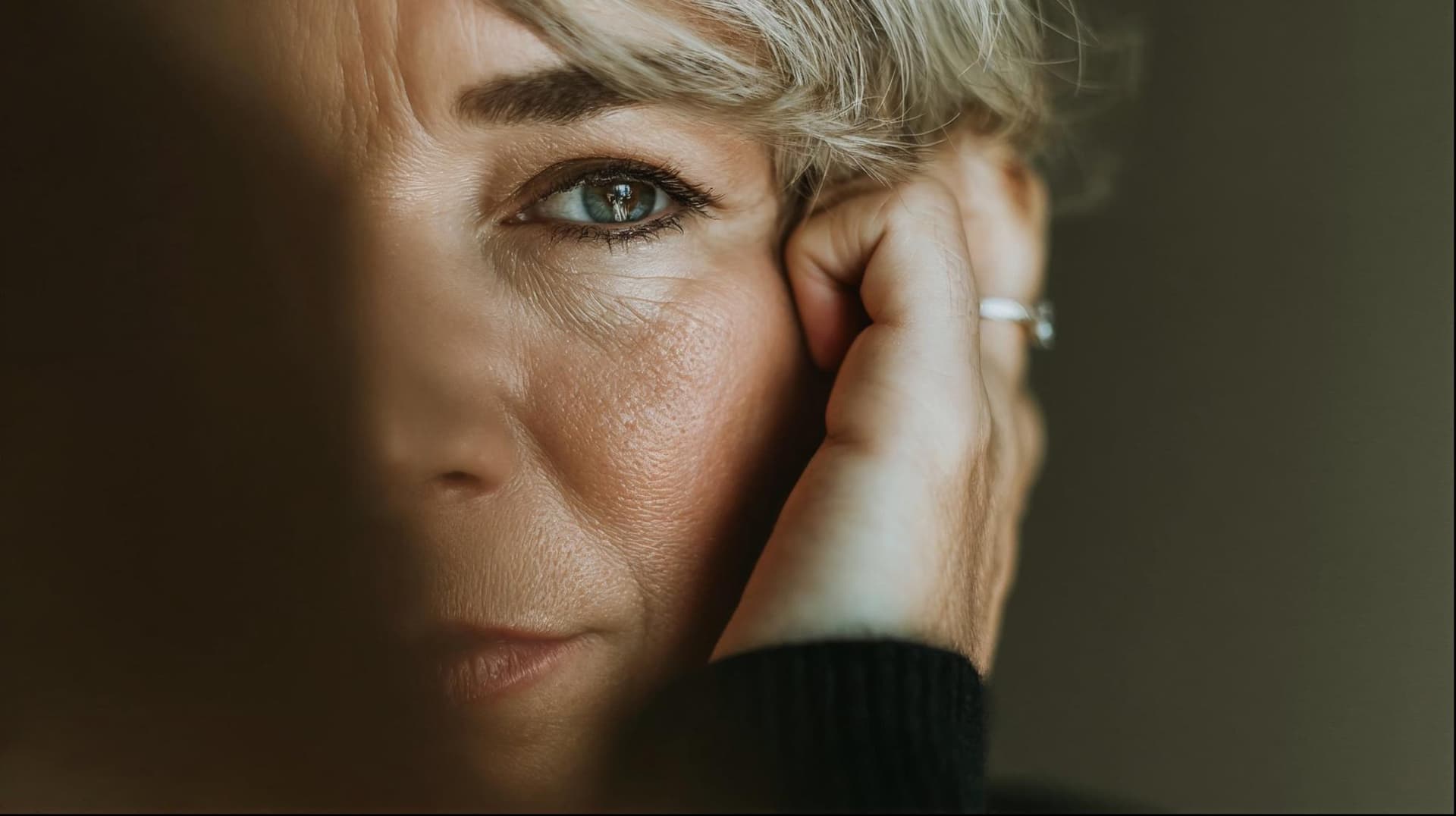
Palms sweating, heart racing, thoughts jumbling.
Feeling anxious is a normal human emotion, a necessary one in fact. Anxiety serves a natural purpose as a response to stress, danger and uncertainty. However, it's often overlooked, dismissed or seen as a sign of weakness and lack of control.
Prolonged and intense experiences of anxiety can take a significant toll on our day-to-day lives and overall health. In recent years, the audiology field has rapidly evolved, and as a result has produced a vast volume of research linking hearing loss to mental health.
Focusing specifically on anxiety, multiple studies have shown that hearing loss plays a role in developing the condition and that hearing intervention may provide a solution¹. These results have made it abundantly clear that hearing care professionals have a vital role to play in the push for better mental health care.
Anxiety and hearing loss: the first review
The Prevalence of anxiety disorders and symptoms in people with hearing impairment is the first systematic review of the evidence linking hearing loss with anxiety. The review was published in 2018 and included 25 studies evaluating a total of 17,135 individuals with hearing impairment.
Broadly, the review found that anxiety disorders and symptoms are likely to be higher in people with hearing loss compared to the general population, with 15%-30% of people with hearing impairment showing clinically significant signs of anxiety¹.
The review also investigated the link between the severity of hearing loss and anxiety and found that people with more severe hearing impairment and tinnitus were found to be more likely to have clinically significant anxiety¹. The evidence also showed that anxiety prevalence was lower after surgical intervention for hearing loss, such as cochlear implantation or stapedectomy¹.
Anxiety and hearing loss: additional perspectives
The authors of the 2018 systematic review emphasise the need for further research into the nature of the association between hearing loss and anxiety. Since the review was published in 2018, various studies have emerged with evidence further supporting the relationship and providing insights into the potential mechanisms.
A study from 2022 suggested that structural brain changes may be one mechanism to explain the link between hearing loss and anxiety in older adults². The results of the study found that older adults with high-frequency hearing loss displayed changes in the two brain areas involved in emotion regulation, stress response and memory.
Individuals with high-frequency hearing loss had higher anxiety scores, and these were found to be related to differences in grey matter volume². This pattern suggests that hearing loss may cause neuroplastic adaptations, which put individuals at a higher risk of anxiety².
The authors also acknowledge that anxiety in people with hearing loss can arise from communication challenges, fear of miscommunication and avoidance of challenging hearing situations, which can all lead to social isolation and loneliness².
The social mechanisms of hearing loss and anxiety are echoed in a 2025 study, which proposes several additions³. For people with hearing loss, social anxiety can arise from fears of both misunderstanding people in social situations, and the potential negative evaluation and embarrassment that miscommunication may result in³.
Social anxiety may also cause people to avoid noisy or challenging social situations, which can further diminish communication function³. This avoidance of social situations can lead to isolation and loneliness, which, over time, can contribute to cognitive decline and mental health conditions³.
However, it's important to note that the study recognises the relationship between hearing loss and social anxiety is bidirectional, meaning that while hearing loss may increase social anxiety, social anxiety may also lead to avoidance and other behaviours which can worsen communication.
Studies like these play a fundamental role in raising the profile of mental health and hearing loss in global healthcare discourses. This greater traction can strengthen the call for more research, and ultimately help HCPs and audiologists work towards a more holistic approach to hearing care.
Next steps for HCPs: proactive adaptation
The growing body of evidence suggesting that hearing loss may pose a true risk to people's mental health must be factored into hearing care. Various steps can be taken by hearing care professionals to provide more holistic hearing care that factors in people's mental health challenges, as well as their primary auditory impairment.
Firstly, asking individuals with hearing loss about experiences with anxiety should become commonplace, especially in patients with severe hearing impairment and severe tinnitus. From this place of a better-informed understanding of each individual's case, communication and care can be tailored to meet their mental health needs.
Individuals with hearing loss may not draw a connection between hearing loss and the risk of anxiety, but HCPs can help change that. Having an informed conversation with patients can reassure them that support is available and encourage them to move forward with hearing care as a way to alleviate their symptoms.
Finally, these findings highlight that any aids or adaptations that can help to make communication clearer should be considered by HCPs to help support individuals experiencing anxiety.
Anxiety and hearing loss: the tip of the mental health iceberg
Hearing loss carries other mental health risks in addition to anxiety, such as depression. But can hearing loss lead to depression?
Dive deeper into the mental health aspect of hearing loss with ourreview of the evidence linking hearing loss to depression.
2 Ma W, Zhang Y, Li X, et al. High-frequency hearing loss is associated with anxiety and brain structural plasticity in older adults. Front Aging Neurosci. 2022;14:821537. doi:10.3389/fnagi.2022.821537
3 McClannahan KKS, McConkey S, Levitan JM, Rodebaugh TL, Peelle JE. Social anxiety, negative affect, and hearing difficulties in adults. Trends Hear. 2025;29:23312165251317925. doi:10.1177/23312165251317925