Skip to content
Listen To This
NewsFor professionalsChevronHearing HealthChevronWho We AreTake a hearing testArrow right

Clinical application

Patient communication resources

Communication materials made for you and your clinic to help bring the hearing health story to life in conversation with your peers and patients.


7 Digital and Visual Assets

For the waiting room

Multimedia resources to lower patient stigma, build digital presence, and create an engaging clinic atmosphere before the consultation begins.

In this section you get:

  • CheckmarkBrochures on hearing health
  • CheckmarkVideos for your waiting room
  • CheckmarkInfographic posters around hearing
  • Hearing health

    Brochure: Hearing Health

    A compact patient guide explaining how and why maintaining good hearing may help protect our cognitive health.

    • People

      Audience: Patients / end-users.

    • Format

      Format: 8.5" x 11" tri-fold leaflet.

    • Message

      How to use: This awareness level leaflet is designed for hearing care professionals to share with patients in their clinic or practice.

    DownloadDownload for professional printing
  • Brochure: WellbeingAIMER

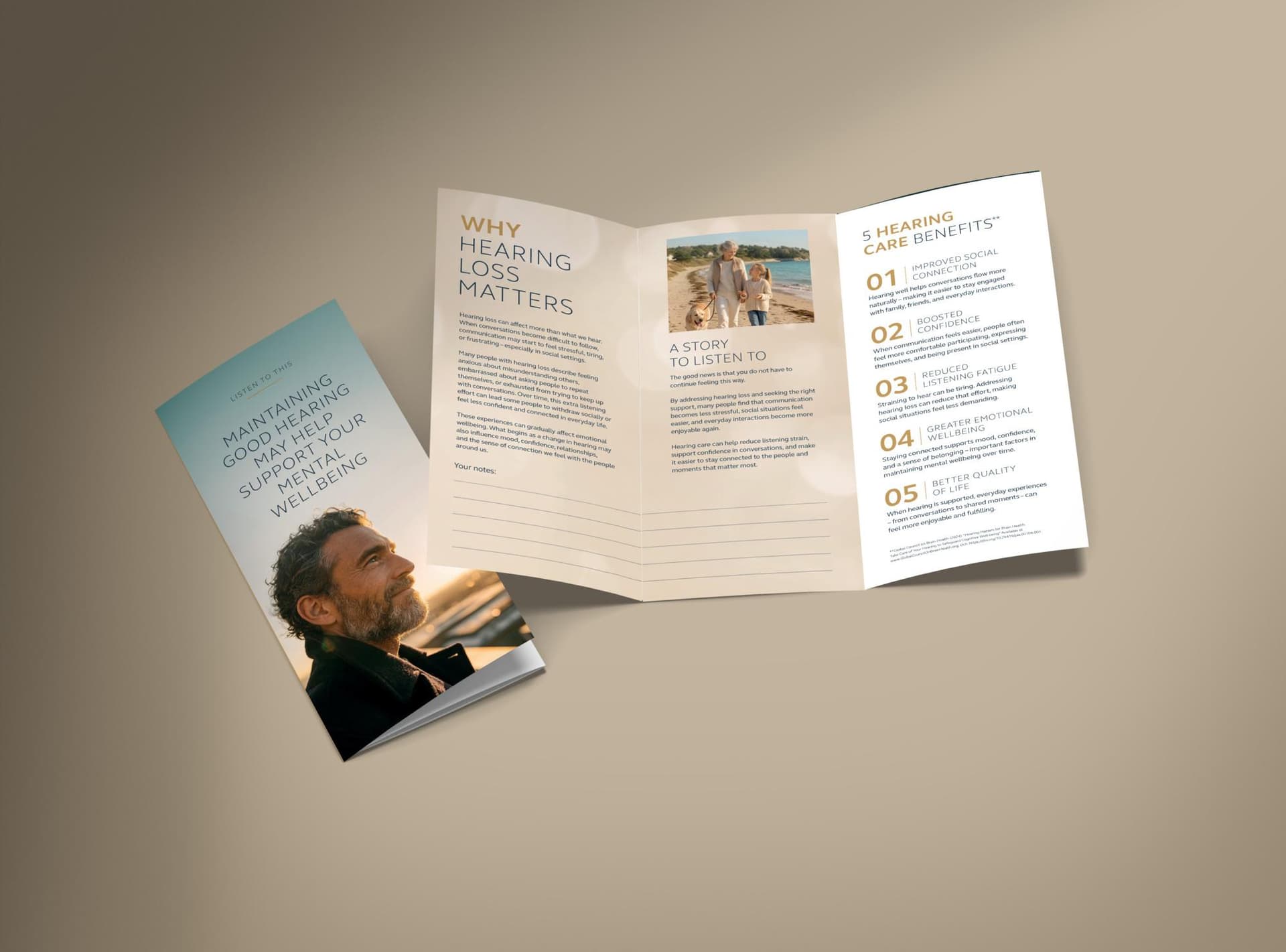
    Brochure: Wellbeing

    A patient-friendly tri-fold brochure explaining how hearing loss can affect mood, confidence, and social connection β€” and how taking action on hearing health can support emotional wellbeing and quality of life.

    • People

      Audience: Patients / end-users

    • Format

      Format: 8.5" x 11" tri-fold brochure

    • Message

      How to use: Share with patients before or after a consultation to reinforce the emotional and social case for addressing hearing loss. Works well alongside a hearing test result or as a waiting room handout.

    DownloadDownload for home printingDownloadDownload for professional printing
  • Mental Health

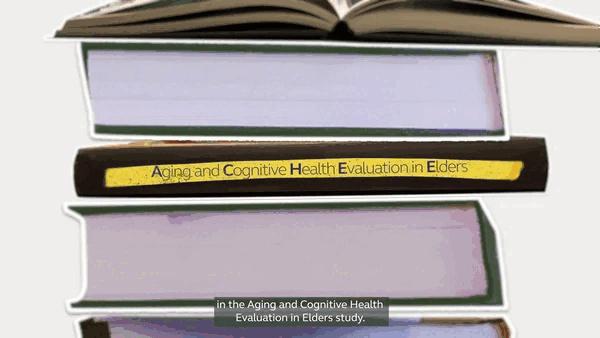
    Waiting room film: ACHIEVE study

    A one-minute story unfolding the evidence and impact of the ACHIEVE study through engaging and easy-to-digest animations.

    • People

      Audience: Anyone with an interest in the science of hearing health.

    • Format

      Format: 16:9 MP4

    • Message

      How to use: This film can be used for waiting room monitors, presentations, events, and more.

    DownloadDownload
  • Cognitive Health

    Waiting room film: Dementia risk factors

    A one-minute story exploring the 14 potentially modifiable risk factors for dementia and what this might mean for prevention.

    • People

      Audience: Anyone with an interest in hearing and dementia risk factors.

    • Format

      Format: 16:9 MP4

    • Message

      How to use: This film can be used for waiting room monitors, presentations, events, and more.

    DownloadDownload
  • Mental Health

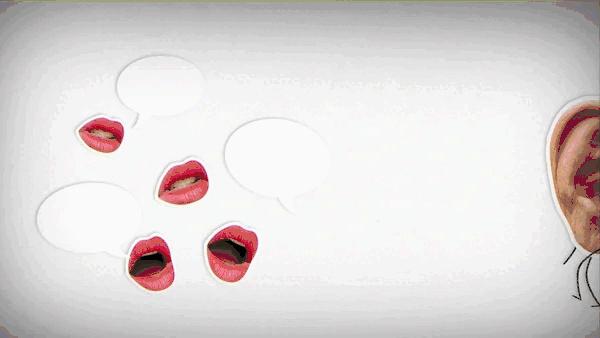
    Waiting room film: The Mental Health Effect

    A one-minute story that raises awareness and understanding of how a hearing impairment can impact people's mental health directly and indirectly.

    • People

      Audience: Anyone with an interest in hearing and mental health.

    • Format

      Format: 16:9 MP4

    • Message

      How to use: This film can be used for waiting room monitors, presentations, events, and more.

    DownloadDownload
  • Cognitive Health

    Waiting room poster: Cognitive Health

    A poster conveying one of the core messages behind the LISTEN TO THISβ„’ movement - that good hearing may be good for cognitive health.

    • People

      Audience: Patients / end-users.

    • Format

      Format: A1 poster

    • Message

      How to use: This educational poster is designed for clinic waiting areas or consultation rooms.

    DownloadDownload
  • Cognitive Health

    Waiting room poster: Dementia

    A poster introducing the 14 modifiable risk factors for dementia - including hearing loss - in an easy-to-understand infographic style.

    • People

      Audience: Patients / end-users.

    • Format

      Format: A1 poster

    • Message

      How to use: This educational poster is designed for clinic waiting areas or consultation rooms.

    DownloadDownload

5 Resources

In-Clinic Consultation

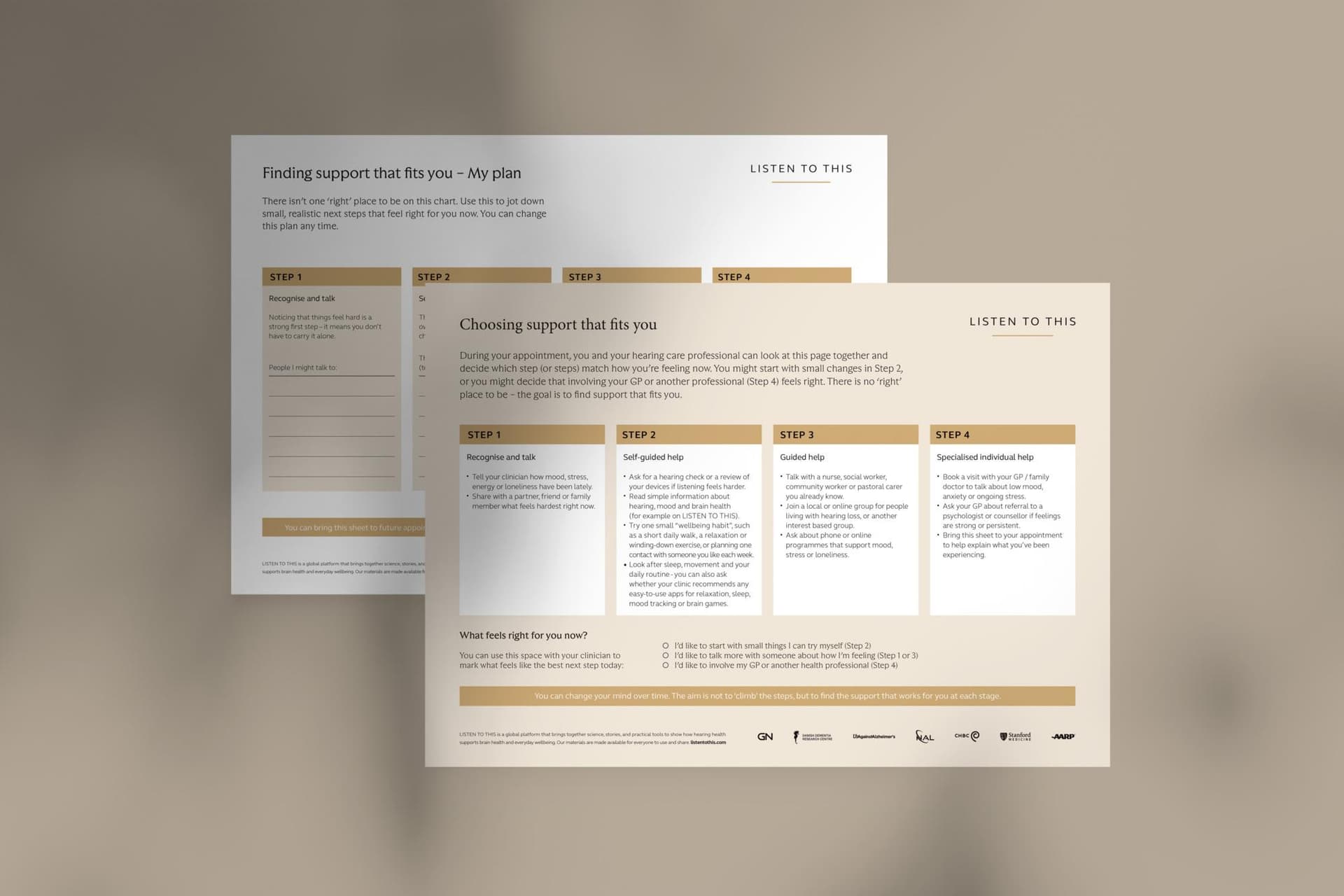
Materials to confidently address cognitive health, listening effort, and emotional wellbeing right at your desk without adding complexity to appointments.
In this section you get:

  • CheckmarkCase history questions
  • CheckmarkConversation openers
  • CheckmarkPatient tool to open up on feelings
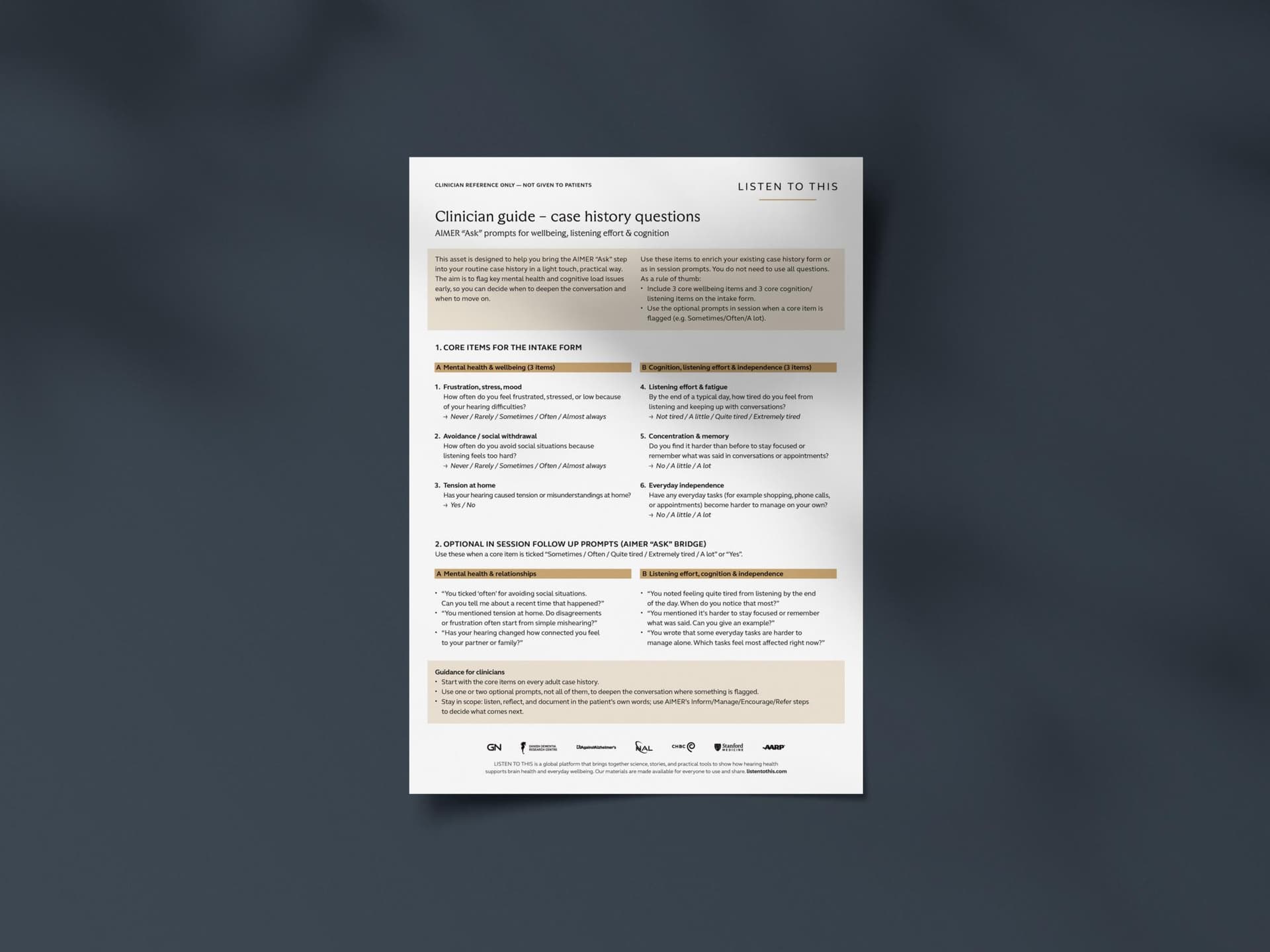
  • Clinician's Guide: Case History QuestionsAIMER

    Clinician's Guide: Case History Questions

    This guide adds a small set of wellbeing and cognition‑focused questions to routine case history, helping clinicians identify when emotional, social, listening‑effort, or independence issues may need more attention. It supports the AIMER β€œAsk” step in a light‑touch, structured way.
    • People

      Audience: Hearing care professionals updating their adult intake forms and interview routines.

    • Format

      Format: PDF / Word, A4

    • Message

      How to use: Select the core wellbeing and/or cognition items for the case‑history form, and use the optional follow‑up prompts in session when responses are flagged (e.g., β€œOften”, β€œA lot”, β€œYes”).

    DownloadDownload for home printingDownloadDownload for professional printing
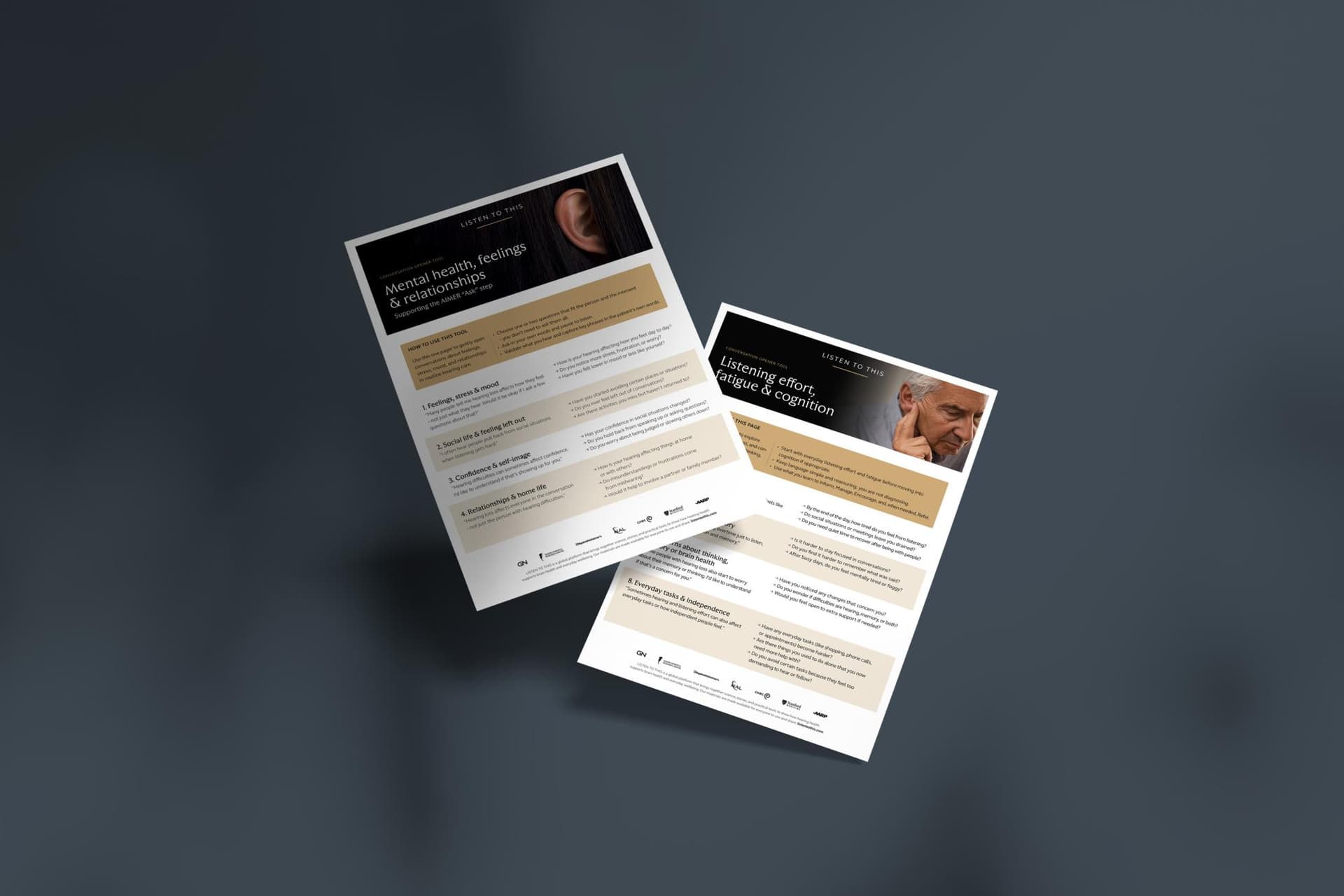
  • Conversation Opener ToolAIMER

    Conversation Opener Tool

    A double‑sided prompt sheet with short, patient‑friendly questions to help clinicians open conversations about feelings, stress, relationships (Side A), and listening effort, cognition, and independence (Side B). It gives concrete wording for the AIMER β€œAsk” step without adding time or complexity.

    • People

      Audience: Hearing care professionals in adult appointments.

    • Format

      Format: PDF, A4, double‑sided (laminated or printed for desk use).

    • Message

      How to use: Keep on the desk and choose 1–2 questions from the relevant section to open the topic; use as a quick reference rather than reading it out in full.

    DownloadDownload for home printingDownloadDownload for professional printing
  • Feelings Wheel ToolAIMER

    Feelings Wheel Tool

    A visual β€œfeelings wheel” showing a range of emotions commonly experienced with hearing and listening difficulties (e.g., frustration, feeling left out, embarrassment, worry, stress). It helps patients find words for how they feel and opens the door to deeper AIMER β€œAsk” conversations.

    • People

      Audience: Adults with hearing loss; clinicians using AIMER in mental‑health and wellbeing conversations.

    • Format

      Format: PDF, A4 (ideally laminated for re‑use).

    • Message

      How to use: Place the wheel on the table and invite the patient to point to feelings that resonate (β€œWhich of these feel familiar to you?”). Use their choices and examples as the starting point for Inform, Manage, and, where needed, Refer.

    DownloadDownload
  • Patient Conversation GuideHearing Health

    Patient Conversation Guide

    A quick guide to help hearing care professionals discuss hearing health, cognition, and overall wellbeing with their clients.

    • People

      Audience: Hearing care professionals.

    • Format

      Format: 8.5" x 11" US letter

    • Message

      How to use: This guide can be used as a practical in-office tool that can be referred to both prior to and after a consultation.

    DownloadDownload for home printingDownloadDownload for professional printing

4 Resources

Interdisciplinary Collaboration

Outreach toolkits and summary sheets of key information designed to help you communicate effectively with other healthcare professionals and build trusted referral networks.
In this section you get:

  • CheckmarkStructured conversation pitches to successfully connect with local doctors
  • CheckmarkProfessional leave-behind leaflets for GPs, ENTs, and neurologists
  • CheckmarkEvidence-based summaries of the landmark ACHIEVE study findings
  • Brochure: ACHIEVE studyCognitive Health

    Brochure: ACHIEVE study

    A concise expert brochure unfolding the essential evidence in the Aging and Cognitive Health Evaluation in Elders (ACHIEVE) study.

    • People

      Audience: Hearing care professionals.

    • Format

      Format: Double gatefold (4 panel).

    • Message

      How to use: This brochure is ideal to get a summarized overview of the key findings from the landmark ACHIEVE study.

    DownloadDownload
  • Brochure: Healthcare Professionals CollaborationHearing Health

    Brochure: Healthcare Professionals Collaboration

    A compact but comprehensive leaflet focused on how good hearing care is good for healthcare – in terms of addressing a growing health burden, reducing care costs, and improving quality of life.

    • People

      Audience: All healthcare professionals, including ENT specialists, GPs, and neurologists.

    • Format

      Format: 8.5" x 11" tri-fold leaflet

    • Message

      How to use: This brochure is primarily designed for hearing care professionals to share with potential healthcare colleagues in your network.

    DownloadDownload
  • Hearing Health

    Healthcare Collaboration Guide

    This guide is designed to help hearing care professionals better connect and collaborate with their counterparts in healthcare – featuring a series of hearing health conversation pitches

    • People

      Audience: For hearing care professionals looking to collaborate more with ENT specialists, GPs, or neurologists.

    • Format

      Format: PDF

    • Message

      How to use: For maximum uptake, we recommend leveraging this guide together with our Healthcare Professionals brochure.

    DownloadDownload
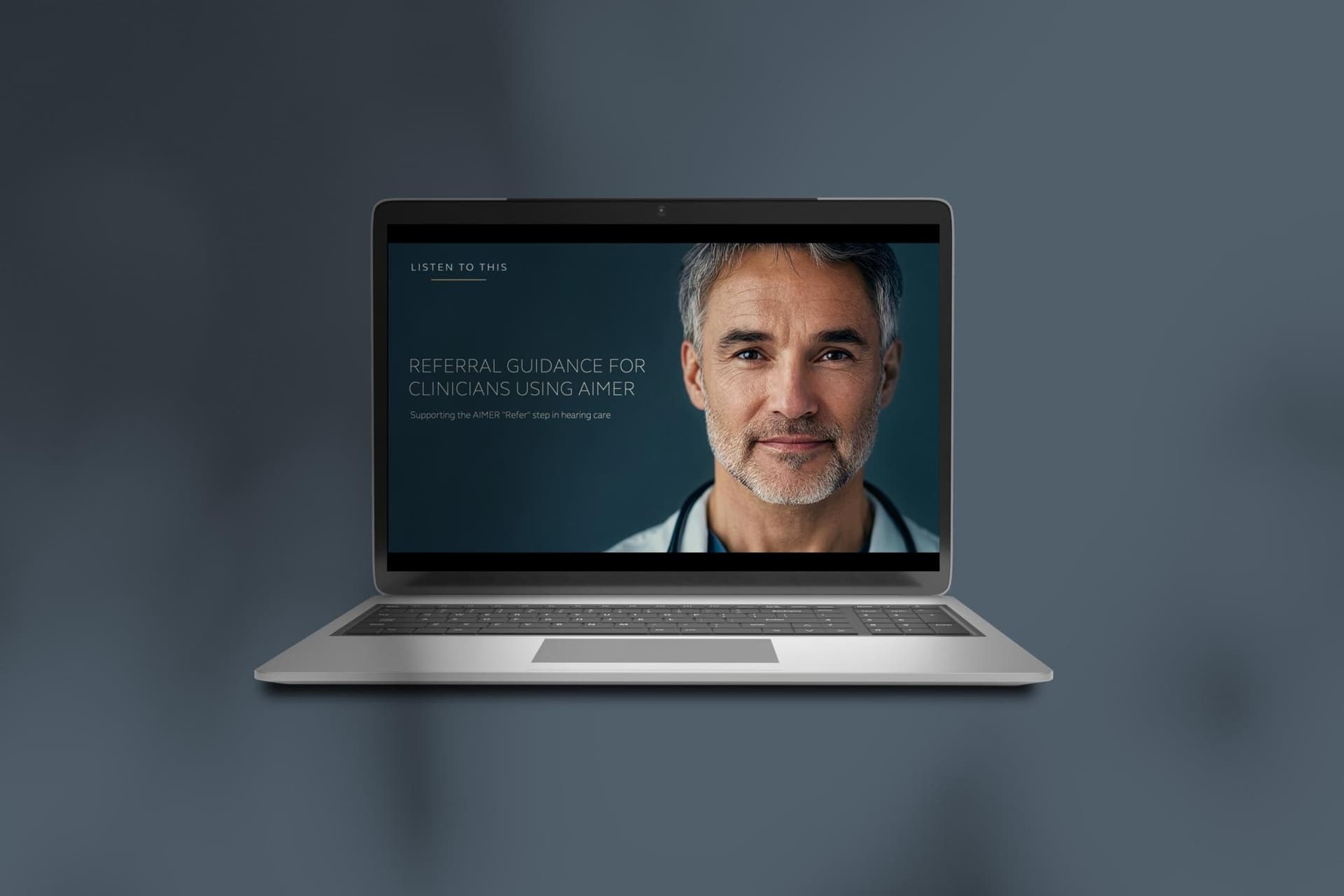
  • Referral Guidance for CliniciansAIMER

    Referral Guidance for Clinicians

    This comprehensive guide helps hearing care professionals navigate referral conversations with confidence while staying within their professional scope. It outlines a clear, four-step framework to handle patient referrals for both mental health/wellbeing concerns and cognitive/memory changes.

    • People

      Audience: Hearing care professionals using the AIMER framework (specifically supporting the "Refer" step)

    • Format

      Format: PDF

    • Message

      How to use: Consult this step-by-step guide when a patient flags wellbeing or cognitive concerns. Use it for your patient consultation to prepare for choosing the appropriate care pathway (such as involving a family doctor, psychologist, or memory clinic), to document observations descriptively, and coordinate the next steps of care.

    DownloadDownload

3 Actionable Resources for Patients

Patient Care and Take-Homes

Everyday-language counseling tools designed to support collaborative care decisions and provide practical, home-management strategies for patients and families.
In this section you get:

  • CheckmarkTargeted patient guides
  • CheckmarkCommunication strategies
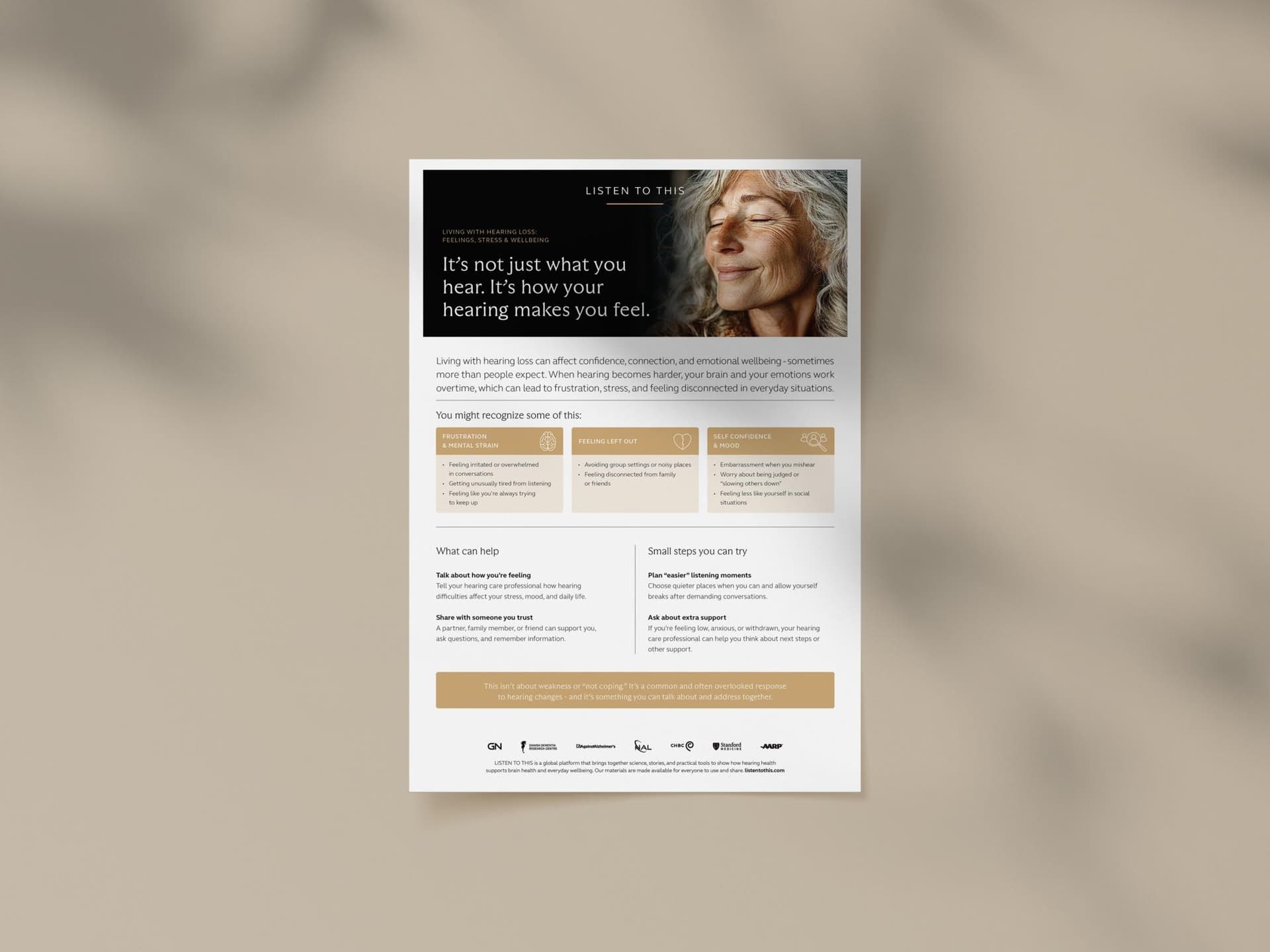
  • Patient Guide: Feelings, Stress & WellbeingAIMER

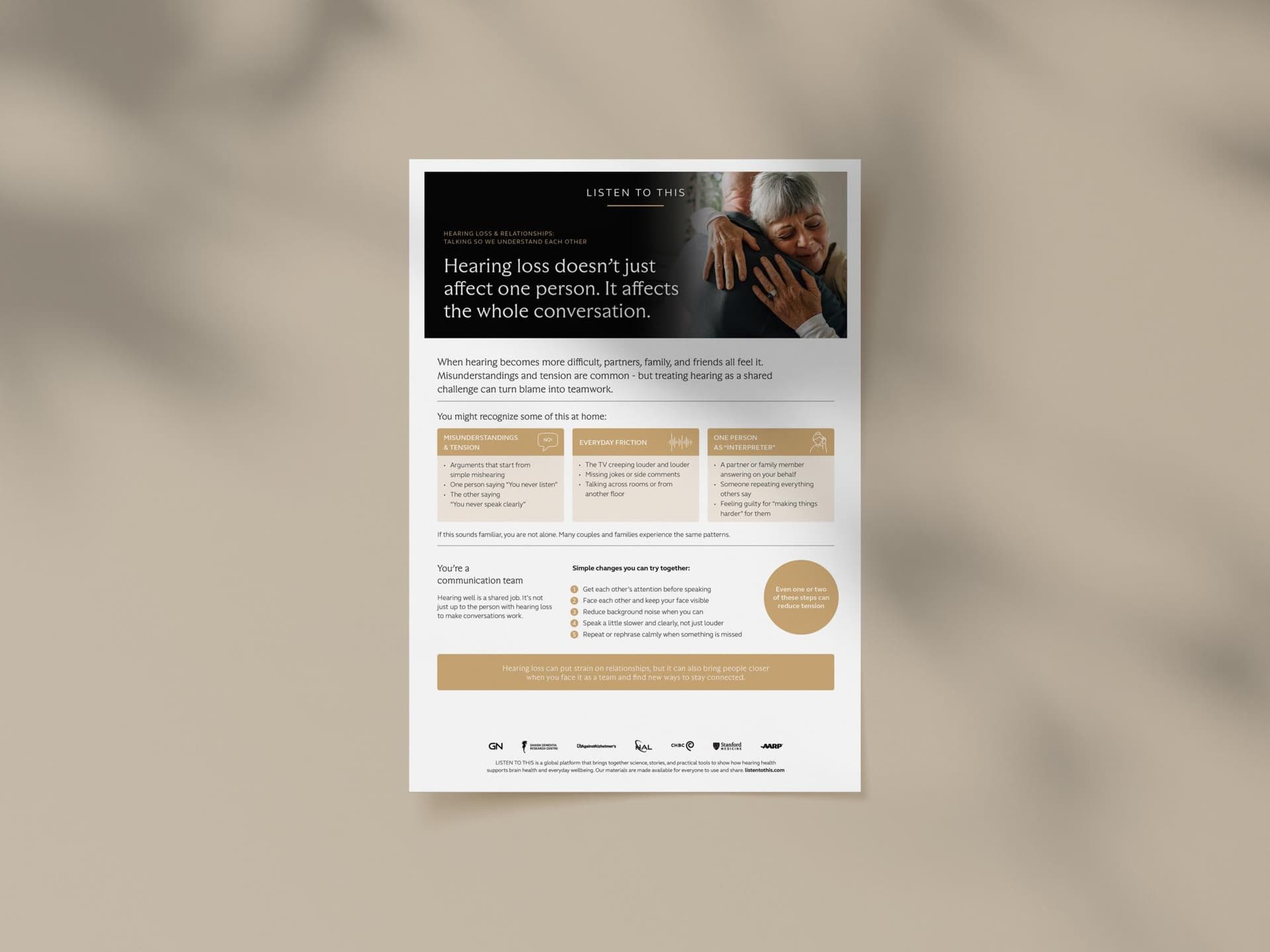
    Patient Guide: Feelings, Stress & Wellbeing

    A patient-friendly one-pager addressing the emotional side of hearing loss β€” including frustration, stress, low mood, and social withdrawal. It helps patients recognise that these feelings are common and not a sign of weakness, and offers simple steps they can try and discuss with their clinician.
    • People

      Audience: Patients / end-users.

    • Format

      Format: PDF, A4, single-sided.

    • Message

      How to use: Share when a patient mentions stress, mood, or confidence concerns. Use as a conversation opener or leave-behind after discussing the emotional impact of hearing loss.

    DownloadDownload for home printingDownloadDownload for professional printing
  • Patient Guide: Hearing Loss & RelationshipsAIMER

    Patient Guide: Hearing Loss & Relationships

    A patient-friendly one-pager exploring how hearing loss affects communication between partners, family members, and friends β€” and how reframing it as a shared challenge can reduce tension and strengthen connection. Includes simple communication strategies couples and families can try together.
    • People

      Audience: Patients / end-users - particularly relevant to share with a partner or family member.

    • Format

      Format: PDF, A4, single-sided.

    • Message

      How to use: Share when a patient mentions tension at home, a partner who repeats everything, or guilt about "making things harder" for others. Consider giving two copies β€” one for the patient and one for their partner or caregiver.

    DownloadDownloadDownloadDownload for professional printing
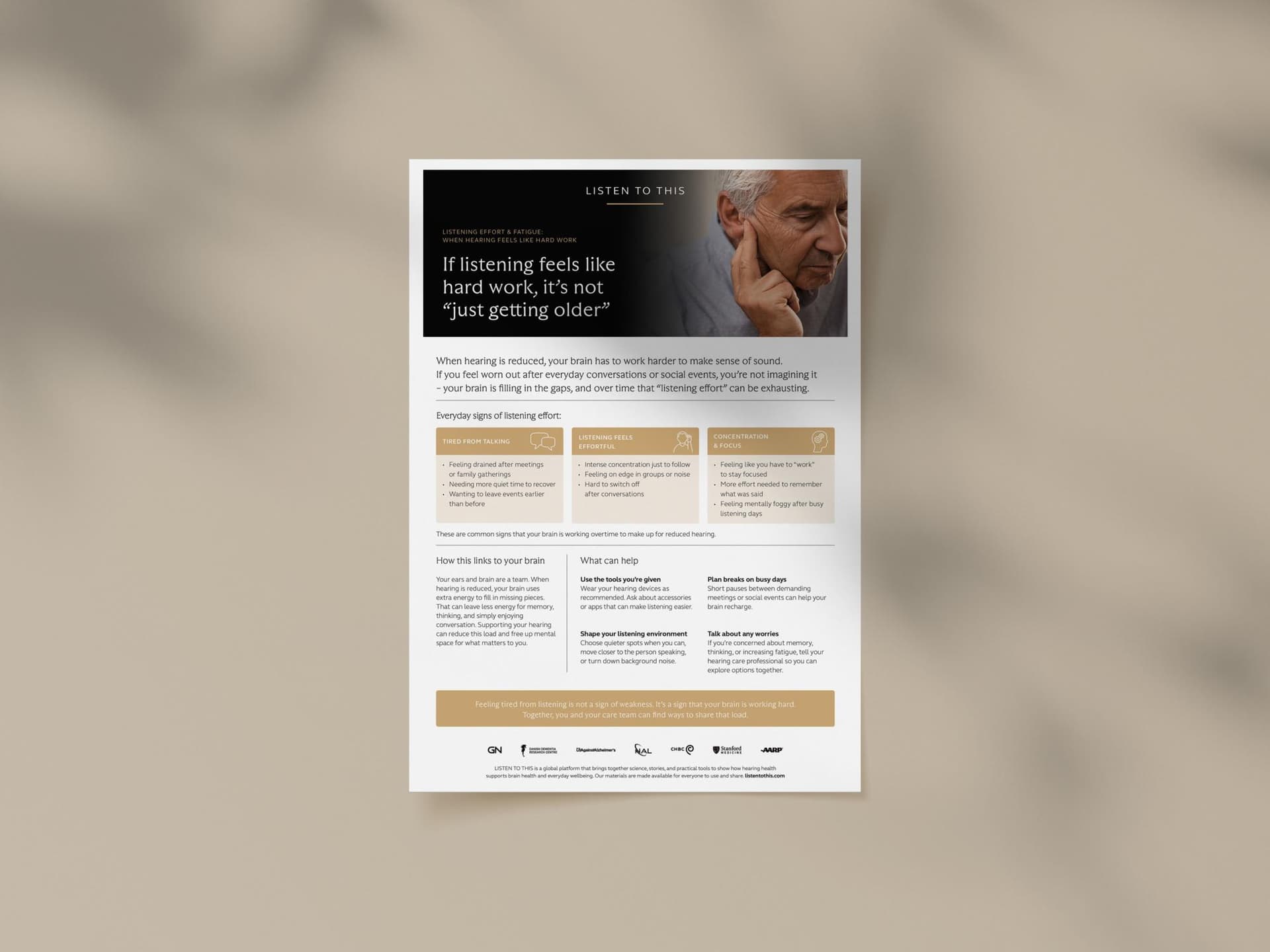
  • Patient guide: Listening effort and fatigueAIMER

    Patient guide: Listening Effort and Fatigue

    A patient‑friendly one‑pager that explains why listening can feel like hard work with hearing loss β€” including tiredness after conversations, β€œbrain fog”, and needing extra quiet time. It helps patients recognise everyday signs of listening effort, links these to how the ears and brain work together, and offers simple strategies they can try and discuss with their clinician to reduce strain.

    • People

      Audience: Patients / end-users.

    • Format

      Format: PDF, A4, single-sided.

    • Message

      How to use: Share when a patient describes feeling unusually tired from listening, drained after social events, or worried about β€œbrain overload”. Use it to explain listening effort in plain language, agree on one or two strategies to try, and leave it with the patient to review or share with family.

    DownloadDownload

Listen in: The latest research insights

A collection of articles digesting latest stories, science and data within audiology and hearing health.

See all articles
The case for mid-life hearing careArrow rightArrow rightSpotlightThe case for mid-life hearing careFor years, the connection between hearing loss and dementia has gained attention - particularly in older adults. But a growing body of evidence suggests the most impactful time to intervene may be much earlier than previously assumed.The benefits of hearing careArrow rightArrow rightSpotlightThe benefits of hearing careWhile hearing loss is sometimes perceived as more of a nuisance and something you can learn to accept, the significant positive impact of timely hearing care is something we're becoming increasingly aware of.The fight against dementiaArrow rightArrow rightSpotlightThe fight against dementiaWith rates of dementia rising globally, we explore an emerging path to prevention within the world of audiology.The Loss EffectArrow rightArrow rightHearing for lifeThe Loss EffectIn part one of this special series, we turn the spotlight to quality of life – asking what are the potential health consequences of an untreated hearing loss?



See all articles

Visit our Masterclasses

Boost your knowledge:

The future of hearing health, taught by the experts. Access unparalleled insights and experience learning like never before.

See our Masterclasses
Sigurd Brandt

Site footer

Supported by:

  • GN
  • CHBC
  • Danish Dementia Research Centre
  • NAL
  • US Against Alzheimer's
  • Stanford Medicine
  • AARP

Ready to join us?

If your organization shares our goal of shaping a future where hearing health is both recognized and prioritized, reach out to see how we can collaborate.

Get in touch

LISTEN TO THIS

Good hearing is essential for staying socially connected β€” a key factor in maintaining mental well-being. By working with hearing experts, we help you stay engaged, confident, and mentally balanced in everyday life

contact@listentothis.com
Lautrupbjerg 7, 2750 Ballerup, Denmark


  • Privacy Policy
  • Cookie Declaration
  • Consent
  • Join our newsletter
  • LinkedInFollow us
πŸ‡ΊπŸ‡ΈEnglish