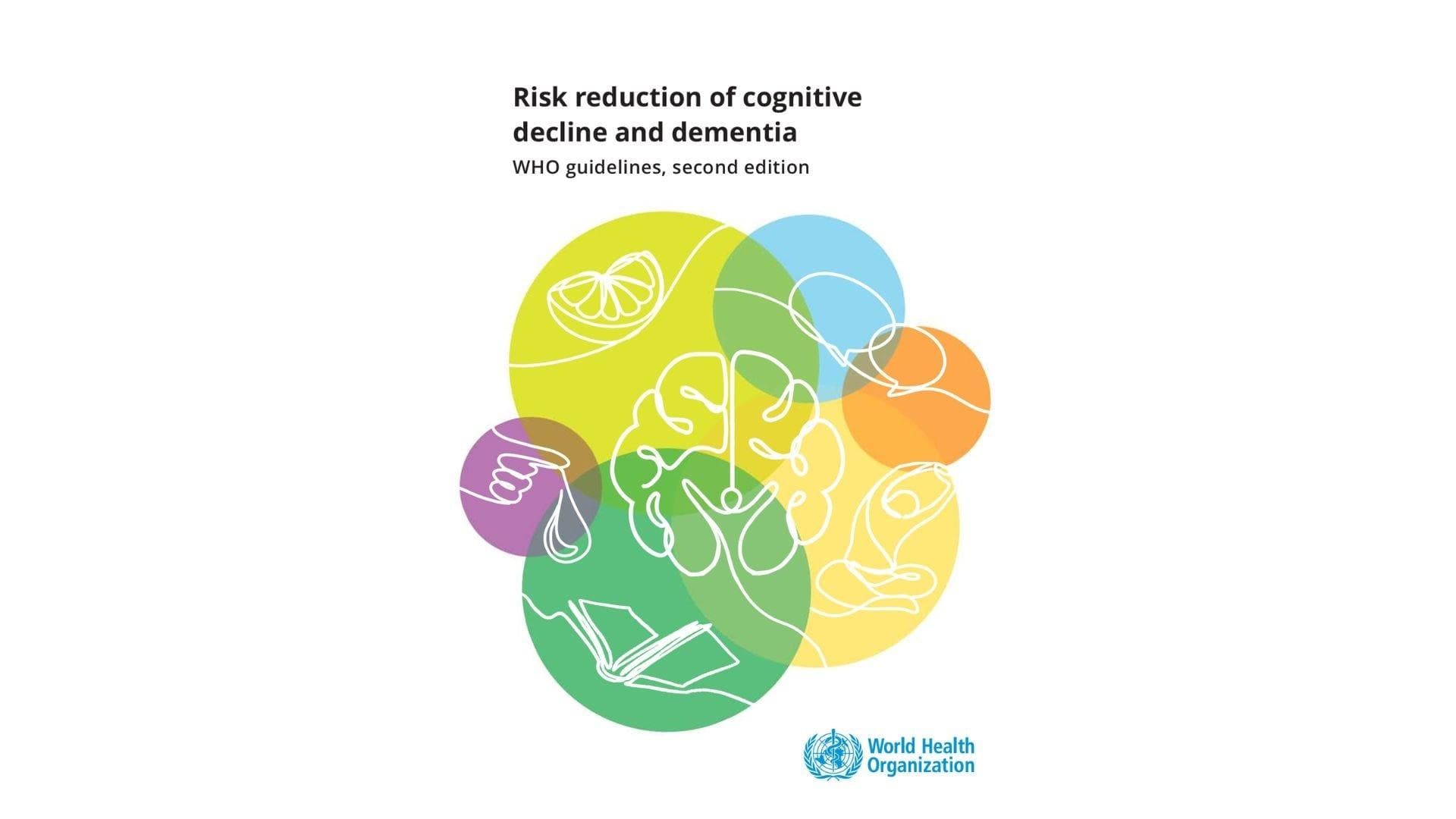
Copenhagen, July 28, 2026 — For decades, hearing health has been left out of the global conversation on dementia prevention. That changes now. In a landmark update published on July 15, 2026, the World Health Organization (WHO) has for the first time formally included hearing aids among its recommended strategies for reducing the risk of cognitive decline and dementia – a shift that experts in hearing health are calling long overdue.
A landmark step forward
The second edition of WHO's Risk Reduction of Cognitive Decline and Dementia guidelines states that hearing aids "may be offered to adults with hearing loss" to reduce the risk of cognitive decline and dementia.¹ The recommendation is classified as conditional, grounded in a growing body of observational research linking hearing aid use to reduced dementia risk.²,³
It represents a decisive shift from WHO's 2019 guidelines, in which the organization concluded the evidence was too limited to make any recommendation on hearing aids at all. The evidence base has grown since then. The WHO's expert panel concluded recently that the potential benefits likely outweigh the harms, particularly given the global scale of unaddressed hearing loss and its known association with cognitive decline.
What this means
This is not a claim that hearing aids prevent dementia. WHO is clear on that. What the new guidance does establish is that treating hearing loss may be a meaningful part of a broader, proactive approach to protecting brain health over time.
Dr. Sigurd Brandt, Medical Director at LISTEN TO THIS, was invited to comment on this milestone recommendation in an interview with Forbes. He has long advocated for this perspective and mentioned that misconceptions about hearing loss can leave people feeling "more scared than hopeful", when in reality, the science points to reasons for optimism.
"Hearing aids naturally help us hear better. By hearing better, you remove that barrier of understanding, which means that instead of just focusing on hearing what's being said, you can understand what's being said and you can participate,"
says Dr. Brandt.
Overall, he highlights that, there are three key pathways through which untreated hearing loss may raise dementia risk:
• the brain receiving less stimulation over time
• cognitive resources being overextended to process unclear sound
• and social withdrawal, as people with hearing loss pull back from conversations and gatherings that keep the mind sharp.⁴
Dr. Brandt draws a simple but powerful analogy in the interview with Forbes: hearing aids are to ears what glasses are to eyes.
Hearing care is not about fear. It is about giving your brain what it needs to stay engaged, connected, and healthy.
A blind spot with high stakes
Despite the science, hearing health remains stubbornly absent from the way most people think about healthy aging. Our LISTEN TO THIS study published earlier this year found that while 88% of Americans consider exercise part of a long and healthy life, only 1% rank monitoring their hearing among their top five longevity priorities.
The stakes of this blind spot are high. WHO projects that 1 in 4 people will live with hearing problems by 2050.¹ The 2024 Lancet Commission on dementia identified unaddressed hearing loss as one of the largest potentially modifiable risk factors for dementia globally.⁵ WHO estimates that eliminating hearing loss at the population level could overall prevent around 7% of dementia cases.¹
The longevity blind spot is not just a personal oversight. It is a brewing public health challenge.
Turning awareness into action
WHO's updated guidance is a meaningful signal. But signals only matter if they change behaviour.
As hearing health initiative, LISTEN TO THIS is built on exactly this insight: when people understand the connection between hearing health and brain health, they act.
Research shows that 35% of Americans who have never had a hearing test say they would seek one after learning about the link between hearing loss and cognitive decline.
Elevating hearing health from a neglected blind spot to a routine part of health conversations has been at the core of the LISTEN TO THIS agenda from the start.
As Dr. Brandt puts it in his interview with Forbes, when your sight gets worse, you do not squint and hope for the best. People book an eye test, find a solution, and get on with their life.
Hearing health deserves exactly the same response. With WHO's updated guidelines now lending institutional weight to that message, there has never been a better moment to take that first step, understand where your hearing stands, and explore what can be done about it
About LISTEN TO THIS
LISTEN TO THIS is a partnership-driven global movement to promote hearing-health awareness, developed in collaboration with leading scientists, clinicians, and public-health experts. The platform brings together research, lived experience, access to an online hearing test, and practical guidance to help people understand the role hearing plays in how we think, connect, and age.
1 World Health Organization. Risk reduction of cognitive decline and dementia: WHO guidelines, second edition. Geneva: WHO; 2026.
2 Yeo BSY, Song H, Toh EMS, et al. Association of hearing aids and cochlear implants with cognitive decline and dementia: a systematic review and meta-analysis. JAMA Neurol. 2023;80(2):134-141. doi:10.1001/jamaneurol.2022.4427
3 Yang Z, Ni J, Teng Y, et al. Effect of hearing aids on cognitive functions in middle-aged and older adults with hearing loss: a systematic review and meta-analysis. Front Aging Neurosci. 2022;14:1017882. doi:10.3389/fnagi.2022.1017882
4 Griffiths TD, Lad M, Kumar S, et al. How can hearing loss cause dementia? Neuron. 2020;108(3):401-412. doi:10.1016/j.neuron.2020.08.032
5 Livingston G, Huntley J, Sommerlad A, et al. Dementia prevention, intervention, and care: 2024 report of the Lancet Commission. Lancet. 2024;404(10452):572-628. doi:10.1016/S0140-6736(24)01296-0