
Skip to content
Listen To This
NewsFor professionalsChevronHearing HealthChevronWho We AreTake an online hearing testArrow right

Site footer

Supported by:

  • GN
  • CHBC
  • Danish Dementia Research Centre
  • NAL
  • US Against Alzheimer's
  • Stanford Medicine
  • AARP

Ready to join us?

If your organization shares our goal of shaping a future where hearing health is both recognized and prioritized, reach out to see how we can collaborate.

Get in touch

LISTEN TO THIS

Good hearing is essential for staying socially connected — a key factor in maintaining mental well-being. By working with hearing experts, we help you stay engaged, confident, and mentally balanced in everyday life

contact@listentothis.com
Lautrupbjerg 7, 2750 Ballerup, Denmark


  • Privacy Policy
  • Cookie Declaration
  • Consent
  • Join our newsletter
  • LinkedInFollow us
  • FacebookFollow us
  • YouTubeFollow us

Clock

Hearing Health Checklist

Can you spot the subtle signs of hearing loss?

Our bodyArrow down longArrow down long
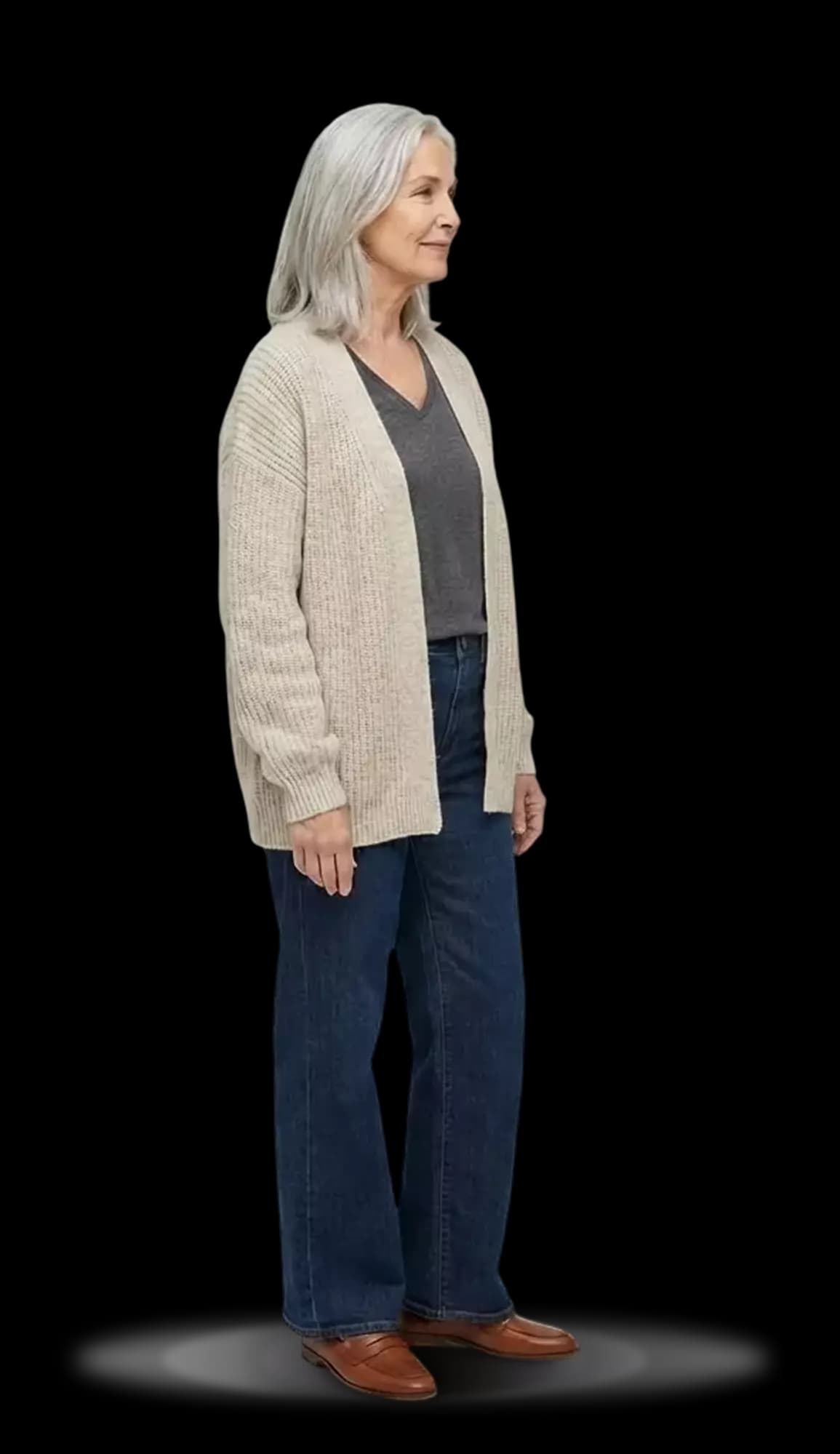
Woman standing
Click to readOur body1Click to readMood Changes2Click to readThe world around you 3Click to readDay-to-day conversations4Click to readIn the crowd5Click to readOut and about6Click to readRelationships7Click to readChallenges with technology8Click to readHelp is here9
Old man with curly hair and grey beard holding his neck
1
Our body

Our body is constantly sending us signals.

Pains, aches, changes in one way or another.

The regular response is to take yourself off to the doctor’s for a check-up. No big deal.

But when it comes to changes to our hearing, we don’t always respond in the same way. Why is that? Probably because we don’t talk about our hearing as much as we should.

Maybe it’s that we don’t want to accept hearing issues because of the stigma of getting older. Or perhaps they get sidelined as “just” another part of ageing. For many people, hearing is neither serious nor urgent, and so falls by the wayside of other, more important issues. But in every case, it is not just a matter of sound. Hearing is closely related to other aspects of health – ones that only get more important as we get older. The health toll of hearing loss starts small but over time, if we don’t do something about it, we may face some more serious issues.

The signs of hearing loss can be obvious, but in many cases, they are very subtle. That’s why knowing what to look for is an important way to pay your hearing health the attention it deserves.

This checklist can help you see if you notice any of the signs that signal you are due for a hearing health check-up.

Woman with short hair and green eyes on a warm brown background
2
Mood Changes

Have you noticed yourself getting frustrated in certain conversations?

Changes to your hearing can sometimes be spotted in your emotional reactions to moments when you find it particularly challenging to listen or follow along. Some people find themselves complaining that the people around them are mumbling or speaking too softly. Often, nothing has changed in the way other people are talking to you – the change is to your hearing. If you can see your patience has been wearing thin in certain conversations, it could be a sign that something is going on with those ears of yours.
Old man standing in front of the kitchen counter with a small boy
3
The world around you

Do you notice the softer sounds in the world around you?

Hearing loss doesn’t just make the world quieter, it can cause all sorts of changes to the way you hear sounds. One of the first symptoms of hearing loss is a lessened ability to hear higher-pitched sounds – think alarms, the microwave beep or even the high-pitched voices of children. If you can recognise that you might have missed the oven timer more often in recent years, or it’s been a while since you really noticed those softer sounds like the rain hitting the roof or the wind rustling the leaves in the trees, it could be a sign that your ears are ready for a check-up.
Old man sitting for breakfast at the table facing two young men
4
Day-to-day conversations

Do you ever miss parts of conversations but smile and nod along anyway?

Smiling and nodding, but not hearing everything that was said, is something we have all done. Maybe it was because the speaker was just so quiet, or there were sirens passing by outside. But more likely, it is because of a change to your hearing. Generally, speech tends to be higher-pitched than background noise. Say you’re in a busy place and you’re with a group of people. Hearing loss could make it harder to hear the people talking directly to you than the sounds in the background. If you do notice the smile and nod combination becoming somewhat of a mannerism, it should be seen as a symptom of your hearing changing.
Woman with shoulder long hair standing in the crowd
5
In the crowd

Do you find yourself getting extra tired after group conversations?

We hear with our brain, as well as our ears. When your hearing changes, your brain has to work harder to listen and focus. If you are struggling to make sense of the conversations happening around you, your brain will have to fill the gaps – and use a lot of energy to do so. This only gets worse the chattier your friends are, especially if they are talking over one another. All the effort your brain puts into separating sounds from each other can mean you are noticeably more tired after social events than you once were. Over the long term, this can change how your brain works, making it more challenging for you to think and remember as well as you used to. So, to keep your energy levels up, your memory good and your thinking sharp, check in with your hearing care provider about a checkup.
Woman who is going through a door at a social event with people sitting and standing at tables behind her
6
Out and about

Do you ever feel hesitant about joining loud or busy social events?

Experiencing some hearing loss can cause some people to enjoy socialising less or avoid it altogether. Feeling worried or anxious that you will mishear, miss jokes or struggle to follow the conversation is common in people with hearing changes. But it shouldn’t be brushed off. Hearing loss can put people more at risk of some mental health challenges like feeling more low, isolated, and even lonely. If you have ever spent the lead-up to a social event worrying about people thinking badly of you in case your ears let you down, or decided to skip it altogether, it would be a good idea to have a hearing check-up. For the health of your ears, your social life and your mental health.
Yound man with curly hair sitting in front of an older one and facing him
7
Relationships

Are you having more hearing-related conflicts with loved ones?
They say communication is key in any relationship. And they’re not wrong. When hearing loss changes the way we hear, and are heard by the people we love, it can put a strain on even our strongest relationships. And we need those – especially as we grow older. Our relationships actually have a huge positive impact on our health by helping protect us from things like loneliness and isolation. If you think your loved ones have not been hearing you properly, or they’ve complained you’re mishearing them, it could be time to ease those tensions with a visit to an audiologist for a check-up.   
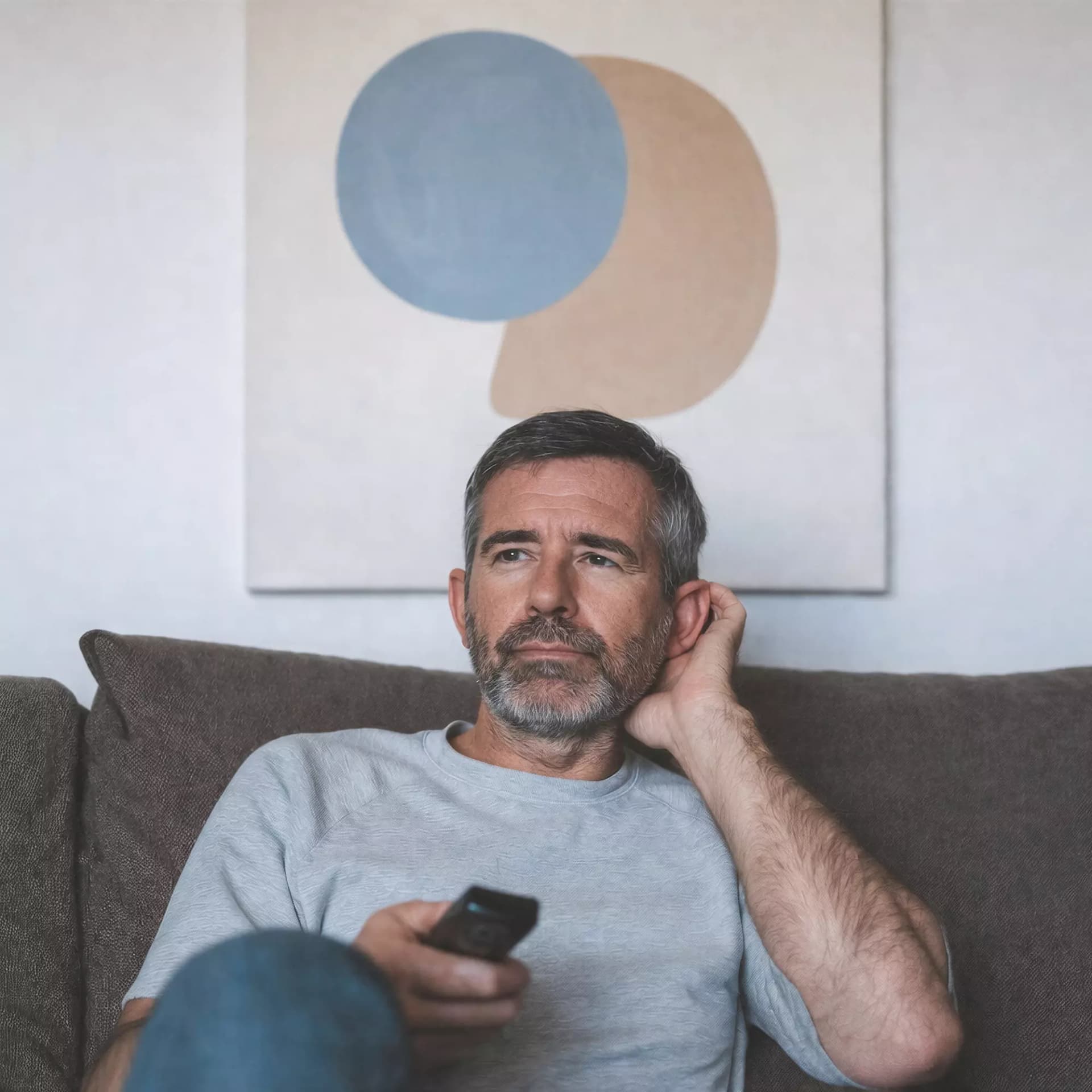
Man sitting on the couch holding his ear with a tv controller in his right hand
8
Challenges with technology

Do you think you need the volume louder on your devices these days?

Whether it’s your TV, your phone or your tablet, the sound coming out of our devices is rarely one-dimensional. Most of the time, we are using them to watch or listen to content that mixes talking with music and sound effects. But because hearing loss changes our ability to hear certain sounds, it can mean that the music and sound effects drown out the sound of the speech. If you find yourself hitting that volume increase button to hear what people are saying, it could be high time for a hearing check.
Older woman with grey hair holding hands with a young kid close to the beach
9
Help is here

Help is here

If you found these questions relatable at all, for yourself or for a family member, there’s no need to panic or worry. Hearing loss is a perfectly normal part of getting older, but it can, of course, create some challenges. For the health of your mind, body and relationships, it is strongly encouraged to keep a close eye on your hearing health.

For yourself

If you yourself think you might be experiencing changes to your hearing, you can take a hearing test, either online from the comfort of your own home, or in-person with a trained hearing care professional at your local hearing care provider.

For those you love

If you suspect a loved one is going through some hearing changes, it would be worth talking about it, for their own health and the sake of your relationship with them. This type of conversation might seem daunting, which is why we have created a conversation guide that can walk you through a gentle, nonconfrontational approach to bringing up hearing loss with your friends and family members.

Hearing Health Checklist

Check hearing loss signs

1Circle progress
Arrow
  1. Our body
  2. Mood Changes
  3. The world around you
  4. Day-to-day conversations
  5. In the crowd
  6. Out and about
  7. Relationships
  8. Challenges with technology
  9. Help is here

Think you might need a hearing health check-up?

Maybe it’s been a while since you had a hearing health check. Maybe you’ve never had a one. Either way, not a problem. You can get started right now with this hearing health checklist.

Start our online hearing test

Read next

Frequently asked questions

The first sign of hearing loss is usually a reduced ability to hear high-pitched sounds, such as microwave beeps, alarms, birdsong or children's voices. Speech may start to sound mumbled, especially in noisy rooms. Because the change is gradual, family and friends often notice it before you do.

Three types of hearing loss exist: sensorineural, caused by damage to the inner ear or hearing nerve and usually permanent; conductive, caused by a blockage or problem in the outer or middle ear and often treatable; and mixed, a combination of both. Sensorineural is the most common type.

Hearing loss in one ear can be caused by earwax blockage, an ear infection, fluid behind the eardrum, or damage to the inner ear or hearing nerve. If hearing disappears suddenly in one ear, treat it as urgent and contact a doctor within 24 to 48 hours.

If you're experiencing signs of hearing loss, take an online hearing test to get a quick indication of your hearing, then book an appointment with a hearing care professional for a full assessment.

Acting early protects your communication, relationships and mental wellbeing, and makes treatment more effective.

🇺🇸English